The Importance of Posture and Mobility in Sedentary Lifestyles
For many of us, the modern workday is defined by hours spent in front of a screen. While our minds are moving at high speed, our bodies are often locked in a static, seated position. Over time, this lack of movement does more than just make us feel stiff; it fundamentally alters our physiology. Understanding the difference between posture and mobility is the first step toward reclaiming your physical health in a sedentary world.
The Problem with Prolonged Sitting
The human body was designed for movement, not for the eight to ten hours of stillness that many professional roles demand. When we sit for long periods, certain muscle groups—like the hip flexors and chest—become chronically tight, while others—like the glutes and upper back—become weak and inactive. This imbalance is the root cause of the “slumped” posture that has become so common. Beyond just looking tired, poor posture compresses your internal organs, restricts deep breathing, and can even lead to persistent headaches and reduced mental focus.
Posture vs. Mobility: Why You Need Both
It is a common misconception that “good posture” simply means sitting up straight. Posture is your body’s alignment while still, but mobility is your ability to move a joint through its full range of motion under control. You can have a “straight” back while sitting, but if you cannot comfortably reach overhead or squat down, your mobility is compromised. A healthy lifestyle requires both. Good posture reduces the strain on your ligaments, while good mobility ensures that your body can handle the stresses of daily life without injury.
The “Tech Neck” Epidemic
One of the most specific challenges of a sedentary lifestyle is the forward-head position, often called “tech neck.” For every inch your head moves forward from its natural alignment, it adds approximately ten pounds of extra weight to your cervical spine. This puts immense pressure on the muscles of the neck and shoulders, leading to chronic tension. To combat this, focus on “tucking” your chin slightly and imagining a string pulling the crown of your head toward the ceiling. This simple alignment shift can immediately reduce the strain on your upper body.
Simple Strategies for Desk Ergonomics
You don’t need an expensive setup to improve your workspace, but a few key adjustments can make a significant difference:
-
Eye Level: Ensure the top third of your screen is at eye level so you aren’t looking down.
-
90-Degree Rule: Your elbows, hips, and knees should ideally be at roughly 90-degree angles.
-
Feet Flat: Keep your feet flat on the floor to stabilize your pelvis.
-
Arm Support: Use armrests to take the weight of your limbs off your shoulders.
The Power of “Movement Snacks”
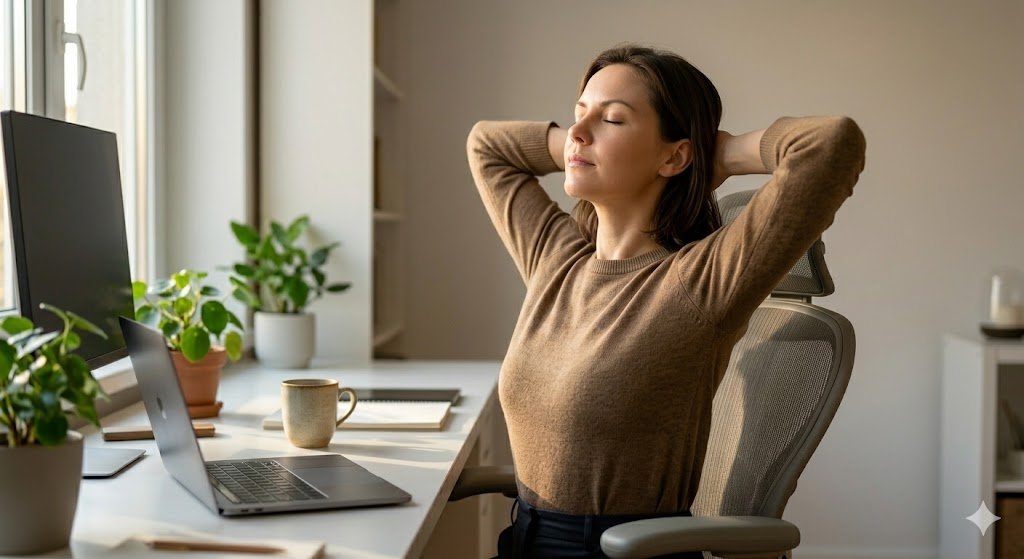
The most effective way to counter a sedentary lifestyle isn’t a single hour at the gym; it’s consistent movement throughout the day. “Movement snacks”—short, 2-minute bursts of activity every hour—are incredibly effective. This could be a quick chest stretch in a doorway, a few standing calf raises, or simply walking to the other side of the room. These breaks “wake up” your nervous system, improve circulation, and prevent your muscles from “setting” into a restricted seated shape.
Improving Mobility Through Functional Stretching
To improve long-term mobility, focus on dynamic stretches that target the “desk-bound” areas:
-
Hip Openers: Lunges or “pigeon” stretches to counter tight hip flexors.
-
Thoracic Extensions: Using a foam roller or the back of a chair to open the upper back and chest.
-
Glute Activation: Simple bodyweight squats or glute bridges to “turn on” the muscles that go dormant while sitting.
The Psychological Link to Posture
There is a fascinating bidirectional link between your posture and your mood. When you are stressed or tired, you tend to slouch. Conversely, sitting or standing in an open, upright position has been shown to lower cortisol levels and increase feelings of confidence and alertness. By fixing your posture, you aren’t just helping your spine; you are sending a signal to your brain that you are capable, focused, and ready to engage with your work.
Conclusion: A Body in Motion
Ultimately, managing a sedentary lifestyle is about intentionality. You may have to sit for work, but you don’t have to be a victim of your chair. By integrating small alignment cues and regular mobility breaks into your day, you build a body that is resilient, pain-free, and energized. Stillness of the mind is a goal, but stillness of the body is a risk. Keep moving, stay aligned, and your health will follow.